Technology keeps changing what is possible. I work on what we build around it.
My work explores how technological change reshapes power, security, opportunity, and human agency, and how we design the systems, institutions, and rules that allow innovation to serve people, strengthen economies, and sustain democratic societies.


Who gets to shape what comes next?
Technological transitions create new sources of power and possibility, but their benefits are not predetermined. My work asks how institutions, businesses, countries, and communities can shape the systems around emerging technology rather than simply inherit them.
The AI Value Ecosystem: Strategic Roles for States in Innovation, Diffusion, and Governance
“A more strategic question is not ‘How do we win?’ but rather ‘What role should we play?’”
AI leadership isn’t one race with one finish line. Countries, especially smaller states and the Global Majority, can build on their own advantages to create value, leverage, and influence.
every pathway
You don’t need to build a frontier model to matter in AI.
Explore the nine strategic roles →
A Blueprint for a New and Equitable Global Data Trade
For Compiler, ahead of the 2025 Paris AI Action Summit: how equitable data-sharing lets Global Majority countries shape the future of AI rather than supply it.
Read in Compiler →Command Line
Essays on AI, cybersecurity, and digital power, and what they mean for how we govern, work, and live.
NetZeroDay
A monthly dispatch where climate risk and cybersecurity collide, decoded through AI.

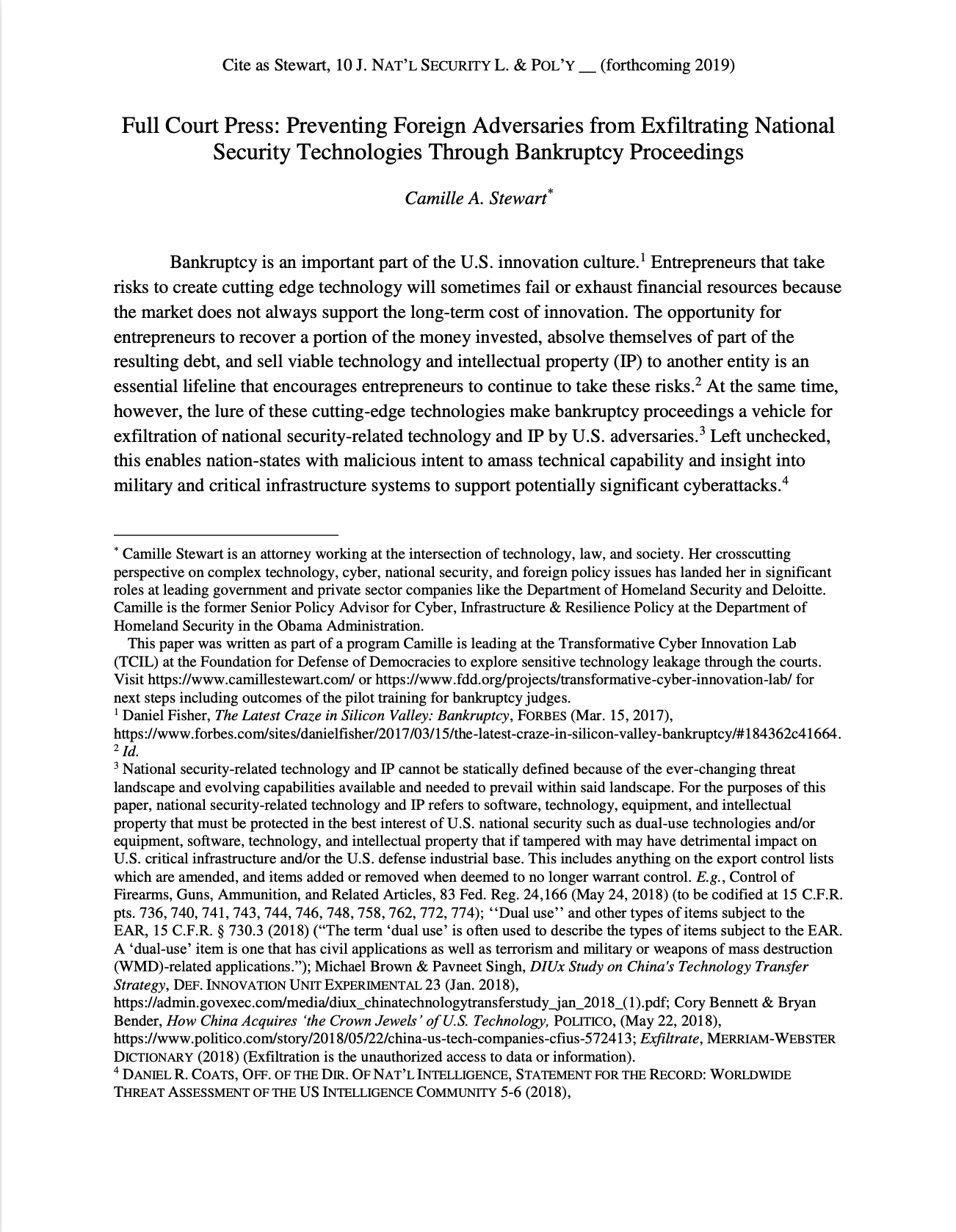
Full Court Press: Preventing Foreign Adversaries from Exfiltrating National Security Technologies Through Bankruptcy Proceedings
As the lead on this project with the Transformative Cyber Innovation Lab, Camille exposed how foreign adversaries exploit U.S. bankruptcy proceedings to acquire sensitive technologies and bypass foreign investment regulations. The work shed light on a critical national security vulnerability and offered actionable solutions, urging reforms that equip bankruptcy judges to identify and mitigate emerging threats.
More than five years after publication, Full Court Press continues to inform debates over technology transfer and economic security. The work has been used in national-security legal education, informed training for the judiciary, and was cited in the record of a 2024 Senate Foreign Relations Committee hearing examining authoritarian competition and the acquisition of U.S. technology.
Its underlying question has only grown more consequential in the AI era: how do we protect strategically important technology and intellectual property when they can move through institutions and transactions that were never designed as national-security controls?
Security fails where it forgets the people it depends on.
Security models describe systems; people run them and are harmed when they fail. Safer Together: Inclusive Cybersecurity, an FDD technical note with a foreword by Samantha Ravich, argues that cybersecurity is a human endeavor: who builds the protocols, whose lives shape the threat model, and which communities carry the consequences. Published in 2023, Safer Together advances a principle that runs across Camille’s work: resilient systems have to account for the people who build, use, depend on, and experience them.
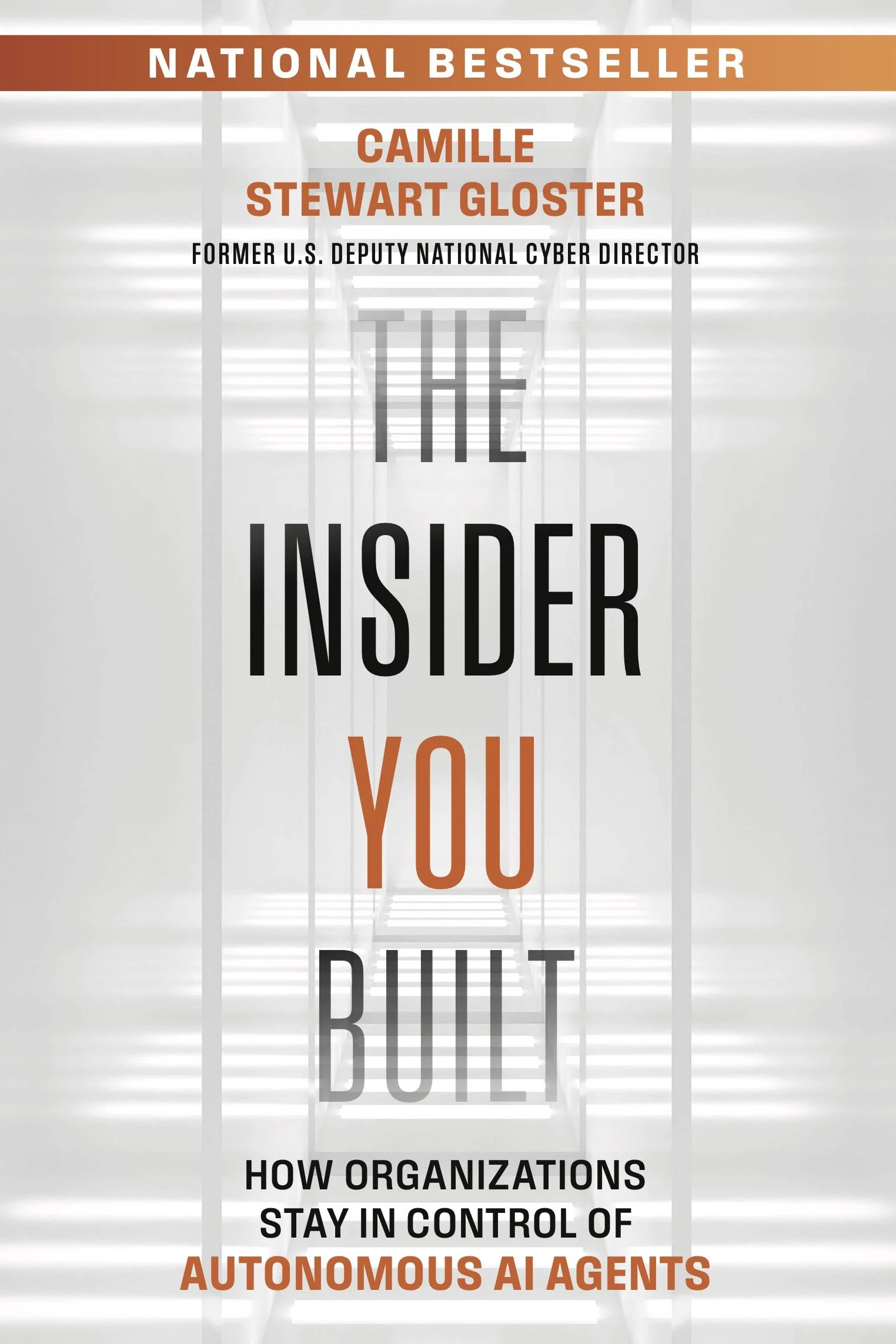
Who is in control when AI can act?
The Insider You Built examines how organizations can harness increasingly autonomous AI while maintaining control over the authority those systems exercise on their behalf. Its Authority-Centered Enforcement framework turns delegation into four disciplines: see, decide, respond, adapt.
“Organizations will need more than policies. They will need governance capable of operating at the speed of the systems themselves.”