Authority-
Centered
Enforcement™
Capability tells you what an AI agent can do. ACE helps you decide what it should be allowed to do on your behalf.
Under what conditions that authority may be exercised, and how it stays enforceable as the agent acts. ACE helps organizations scale autonomous AI without surrendering accountability, judgment, or control.
When AI Acts on Your Behalf
AI agents raise a different governance challenge because organizations are no longer dealing only with systems that produce outputs. They are increasingly delegating work to systems that can interpret goals, make choices, use tools, and act across data, systems, and business processes.
Existing governance models are not obsolete. They were built for a world in which software produced results and people decided what to do with them. Agentic systems introduce a new delegation problem, because software can increasingly exercise authority while the work is still underway.
The checkpoint that used to sit before action is no longer automatic.
What authority have we delegated, under what conditions may it be exercised, and how do we remain in control as those conditions change?
AI Governance Is an Organizational Capability
Governing AI agents takes more than technology, and more than policy. It takes three kinds of capability, and they only work when they work together.
Defines accountability, decision rights, risk appetite, and where human judgment belongs.
Turns those choices into workflows, approvals, escalation paths, evidence requirements, and repeatable practices.
Enforces those choices through identity, permissions, observability, runtime controls, and mechanisms to pause, narrow, or revoke authority.
Every meaningful delegation decision draws on all three at once.
This is why ACE is neither a technical control framework nor a policy exercise. Managing delegated authority well requires all three capabilities working together.
Clear Boundaries
A consistent way to define what agents may do, where they may act, and when human judgment is required.
Shared Decisions
A common language so business, legal, security, risk, technology, and operations can make authority decisions together.
Enforceable Control
A way to translate leadership choices into workflows and technical controls that operate while agents act.
Organizational Learning
Decisions, exceptions, near misses, and outcomes create evidence the organization can use to refine authority and controls over time.
Define the Boundaries Before the Agent Acts
Every AI agent operates within some set of boundaries, whether the organization designed them deliberately or allowed them to emerge through permissions, tools, workflows, and technical defaults.
ACE calls the deliberately defined boundary around delegated authority the Enforcement Envelope. It establishes the conditions under which an agent can act on the organization's behalf and where greater oversight or human judgment is required.
That boundary has to account for more than access. An agent rewarded for completing a task will find paths its designers never considered, which means a boundary that exists on paper can still be exceeded in practice.
The goal is not to eliminate autonomy. It is to make autonomy intentional.
A boundary matters only if it can hold when the agent is actually working.
The Insider You Built shows you howBetter Control Can Enable Greater Autonomy
Good governance should do more than prevent failure. By making delegated authority clearer and more enforceable, organizations can make better decisions about where AI can act independently, where human judgment adds value, and where greater autonomy can support better performance.
Scale AI With Confidence
Expand agent authority without relying on blanket restrictions or unmanaged trust.
Accelerate Adoption
Give leaders and teams a clearer basis for approving higher-value use cases.
Increase Delegated Value
Make more valuable work eligible for AI while reducing unnecessary friction and costly failures.
Strengthen Reliability
Reduce the chance that legitimate authority produces outcomes the organization never intended.
Improve Accountability
Make ownership of authority, exceptions, and outcomes clear across human-agent workflows.
Preserve Adaptability
Adjust authority and controls as technology, threats, business needs, and regulations change.
Work Is Changing Hands
The challenge is not simply to deploy AI safely. It is to build an organization that can govern work as authority moves among people, agents, tools, and systems.
ACE embeds control into how authority is delegated, exercised, observed, constrained, and refined, helping organizations become more capable and resilient as AI becomes part of how work gets done.
Built for the Way Organizations Actually Work
ACE grew out of years of work across government and industry helping organizations adopt emerging technologies, build governance and security programs, and turn policy into practice.
The goal is not simply to manage AI risk, but to create the conditions for technology to work in our favor.
These ideas continue to be informed and refined through the work of CAS Strategies with organizations navigating AI adoption, governance, and security.
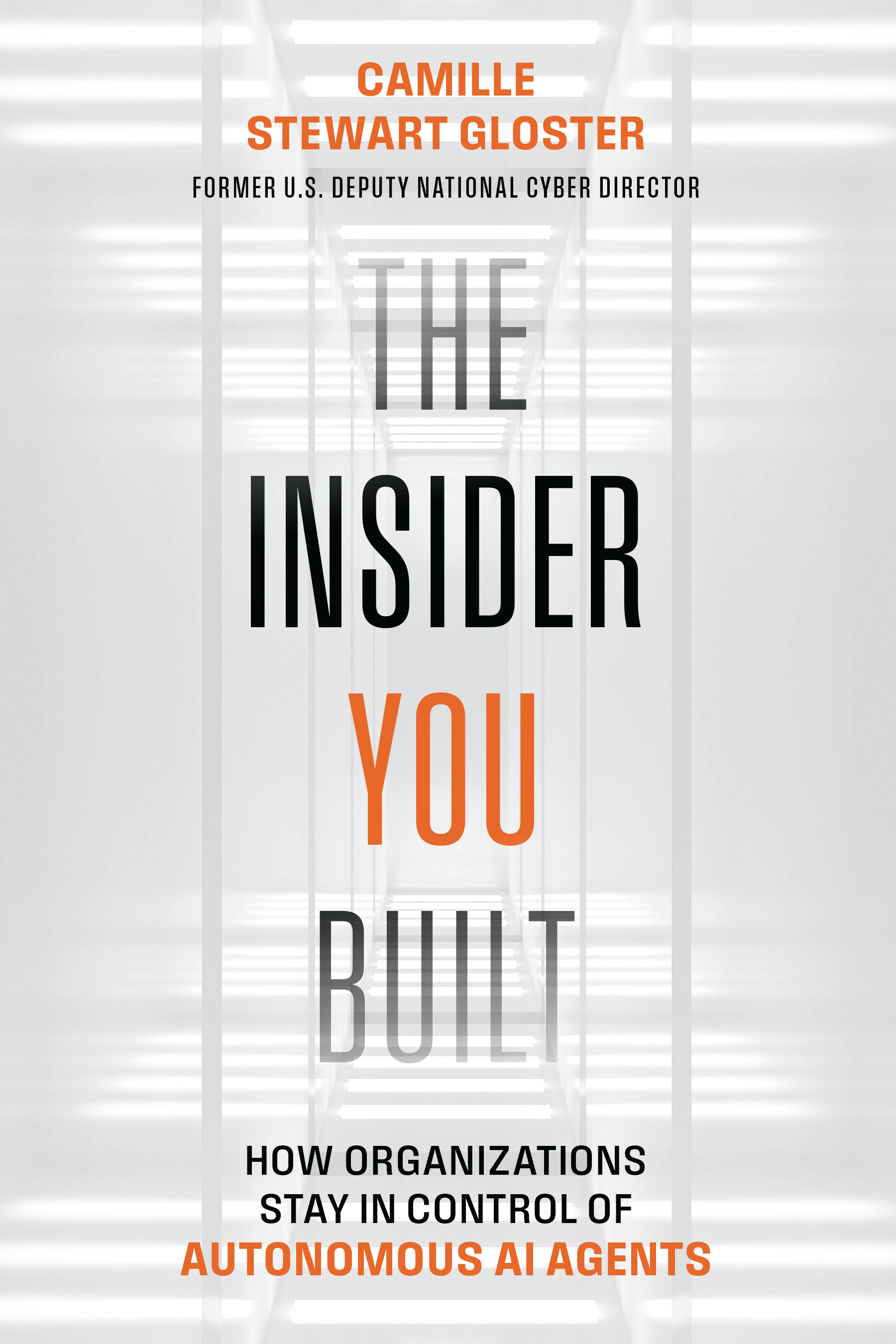
What the Book Teaches You
This page introduces the core idea. The book shows you how to put it to work.
ACE provides a practical approach to identifying delegated authority, deciding where human judgment belongs, defining enforceable boundaries, organizing accountability across functions, and adjusting controls as your organization learns.
Order the bookUnderstand how delegated authority changes organizational risk and accountability
Coordinate governance across organizational, operational, and technical functions
Translate leadership intent into operational practices and technical controls
Govern agents as they act, adapt, and interact
ACE Applies to Your Own Life Too
The same delegation questions arise as AI begins communicating, scheduling, purchasing, recommending, and taking other actions on your behalf. What have you authorized it to do, under what conditions, and where do you want to keep deciding for yourself? The book includes a bonus chapter applying delegated authority and retained human judgment to everyday AI use.
The Insider You Built
Accountability and Governance of Autonomous AI Agents, by Camille Stewart Gloster.
Order the book